

The 10 AI Tools Every Small Business Should Know in 2026
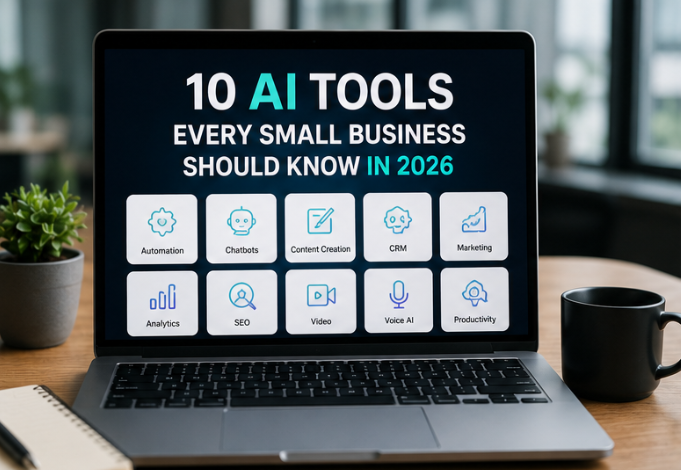
Running a small business in 2026 means competing with companies that have far bigger budgets, bigger teams, and more hours in the day. The good news is that AI has closed that gap more than at any point in the last decade. A solo founder with the right stack of tools can now handle marketing, customer follow up, content creation, and customer service at a level that used to require a five person team.
This guide walks through the ten AI tools that consistently show up in the workflows of successful small businesses this year. Rather than listing features in a vacuum, we've organized this by the actual problems small business owners run into, so you can jump to the section that matches what's slowing you down right now.
1. CRM and Lead Management: Why Every Business Needs One
If you're still tracking leads in a spreadsheet or your inbox, you're losing money. Studies on sales follow up consistently show that most leads go cold within the first hour of contact simply because no one reached out fast enough. A CRM (Customer Relationship Management) system fixes this by automatically capturing leads, following up, and tracking every interaction a prospect has with your business.
In 2026, two platforms dominate the small business conversation: GoHighLeveland HubSpot. They solve the same core problem in very different ways, so let's break down where each one shines.
Why We Recommend GoHighLevel for Local Businesses
GoHighLevel was built with local service businesses in mind, think dentists, contractors, salons, real estate agents, and marketing agencies managing multiple clients. What makes it stand out is that it's an all in one platform: CRM, SMS and email automation, appointment booking, funnel building, and even a white label option for agencies, all under one subscription.
For a local business owner, this matters because you're not stitching together five different tools and hoping they talk to each other. A missed call gets automatically texted back. A booked appointment triggers a reminder sequence. A closed deal moves a client into a review request campaign. It's built to run your entire client lifecycle from one dashboard, which is exactly what a busy local business needs when nobody on the team has time to manage a complicated tech stack.
HubSpot vs GoHighLevel: Which CRM Is Right for You?
HubSpot takes a different approach. It's a more polished, enterprise friendly CRM with deep reporting, a huge marketplace of integrations, and tools that scale well as a company grows into a larger sales and marketing team. If you're running a B2B company with a dedicated sales team, need detailed pipeline reporting, or plan to integrate with dozens of other business tools, HubSpot's infrastructure is hard to beat.
Here's the simplest way to think about the decision:
Choose GoHighLevel if you're a local service business, a marketing agency managing multiple clients, or you want an affordable all in one system without needing five separate subscriptions.
Choose HubSpot if you're a growing B2B company, need advanced sales pipeline analytics, or already have a marketing team that wants granular control over campaigns and reporting.
Both are strong choices. The right one just depends on whether you need an operational engine (GoHighLevel) or a sales and marketing powerhouse (HubSpot).
2. Creating Professional AI Videos with HeyGen
Video is no longer optional in small business marketing. It's expected on your website, in your ads, and across social media. But hiring a videographer, actor, and editor for every piece of content isn't realistic for most small budgets.
This is where HeyGen comes in. HeyGen lets you generate realistic AI avatar videos from nothing more than a script. You pick a digital presenter (or create a likeness of yourself), type or paste your script, and the platform generates a polished video with natural lip syncing and delivery, no camera, studio, or editing software required.
Small businesses are using HeyGen for:
Product explainer videos
Onboarding and training content for new hires
Social media ads in multiple languages
Personalized video messages for high value clients
The biggest advantage is speed. What used to take a week of scheduling, filming, and editing can now be turned around in an afternoon, which matters enormously when you're trying to keep up with content demands on a tight budget.
3. Why We Use ElevenLabs for AI Voiceovers
Great video and great audio go hand in hand, and this is where ElevenLabsfits into the stack. ElevenLabs generates natural sounding, human like voiceovers from text, and it's become the go to tool for businesses that need consistent, professional narration without hiring voice talent for every project.
Here's how small businesses typically put it to use:
Video voiceovers, pairing ElevenLabs narration with a HeyGen avatar or a simple slideshow style video for consistent branding across every piece of content.
Phone systems, building natural sounding IVR menus and voicemail greetings that don't sound like the robotic phone trees customers are used to hearing.
Training content, narrating internal training modules and SOPs so new employees get a consistent, professional onboarding experience without pulling a manager away from their desk to record audio.
The quality has reached a point where most listeners can't tell the difference between an ElevenLabs voiceover and a professionally recorded human one, which means you get studio quality audio without studio costs.
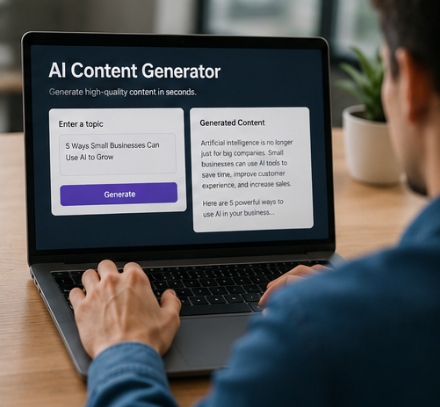
4. Writing Better Marketing Content with Jasper AI
Every small business eventually hits the same wall: marketing requires a constant stream of content, and there simply aren't enough hours in the day to write it all. Blog posts, email newsletters, ad copy, and social media captions all need to go out consistently, and inconsistency is one of the biggest reasons small business marketing efforts quietly die.
Jasper AI was built specifically to solve this. It's a content generation platform trained to write in a business's specific brand voice, and it's widely used for:
Drafting blog posts (like this one) that are structured for both readability and SEO
Writing newsletters that keep subscribers engaged without a full content calendar meeting
Generating email campaign copy, from welcome sequences to promotional blasts
Producing social media captions and ad variations for quick A/B testing
What makes Jasper particularly useful for beginners is that it doesn't require prompt engineering expertise. You describe your business, your audience, and your goal, and it produces a workable first draft that you can then edit and refine, cutting content production time down dramatically.
5. Scheduling and Appointment Booking Tools
Beyond CRM based booking (which GoHighLevel handles well as part of its all in one suite), many small businesses use dedicated AI enhanced scheduling tools that sync across calendars, automatically detect time zones, and send smart reminders to cut down on no shows.
The problem these tools solve is simple but costly: every phone call or email spent going back and forth to find a meeting time is time you're not spending on billable work. Modern scheduling tools eliminate that friction entirely, letting clients book themselves into open slots while automatically blocking off buffer time, travel time, or lunch breaks based on rules you set once and forget.
6. Social Media Management Tools
Posting consistently across five different social platforms is one of the most time consuming parts of running a small business. AI powered social media managers now handle far more than scheduling. They can generate caption ideas, suggest optimal posting times based on your audience's activity, and even repurpose a single blog post or video into a week's worth of platform specific content.
For a small business owner without a dedicated marketing hire, this class of tool is often the difference between a social presence that grows steadily and one that goes silent for weeks at a time whenever things get busy.
7. Customer Service Chatbots
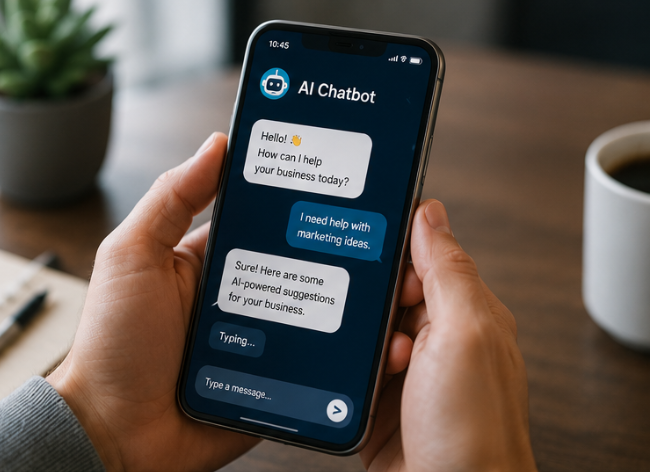
Customers expect answers fast, often outside business hours. AI chatbots trained on your FAQs, product catalog, and policies can now handle the majority of routine customer questions, order status, return policies, appointment changes, without a human needing to respond at 11 p.m.
The key benefit isn't just time savings. It's customer experience. A prospective customer who gets an instant, accurate answer at midnight is far more likely to convert than one who has to wait until 9 a.m. the next day. Many small businesses layer a chatbot directly into their website and their CRM so that any conversation that needs a human touch gets flagged and handed off seamlessly.
8. Email Marketing Automation
Email remains one of the highest ROI marketing channels available, but manually writing and sending every email doesn't scale. AI driven email marketing platforms now handle segmentation (sending the right message to the right group of subscribers), subject line testing, and send time optimization automatically.
Combined with a tool like Jasper AI for drafting the actual copy, small businesses can run sophisticated, multi step email sequences, welcome series, abandoned cart reminders, re engagement campaigns, that used to require a dedicated email marketing specialist to manage.
9. Design and Graphics Tools
Not every small business can afford an in house graphic designer, but every business needs professional looking graphics for social posts, ads, flyers, and websites. AI powered design tools now generate on brand graphics from simple text prompts, resize a single design across dozens of formats automatically, and even suggest layout improvements based on what performs well in your industry.
This matters most for the businesses that need to look polished and consistent across every channel. A mismatched, amateur looking graphic on social media can undercut trust just as quickly as a great product can build it.
10. Bookkeeping and Financial Automation
Finally, the least glamorous but arguably most important category: keeping your books straight. AI powered bookkeeping tools now automatically categorize transactions, flag anomalies, reconcile accounts, and generate the financial reports you need for tax time, cutting down the hours small business owners historically spent doing this manually or paying a bookkeeper hourly to handle it.
For a small business owner wearing every hat, automating this piece frees up time for the parts of the business that actually need a human's judgment: strategy, relationships, and growth.
Building Your 2026 AI Tool Stack: Where to Start
If you're a small business owner reading this and feeling a little overwhelmed by the options, here's the honest advice: you don't need all ten tools on day one.
Start with the two that solve your biggest bottleneck right now:
If leads are falling through the cracks, start with a CRM (GoHighLevel for local and service businesses, HubSpot for growing B2B teams).
If content creation is your bottleneck, start with Jasper AI for writing and ElevenLabs or HeyGen for video and audio.
If customer response time is costing you sales, start with a chatbot and automated scheduling.
Once the foundational piece is in place, layer in the rest of the stack over the following months. The businesses that get the most value from AI tools in 2026 aren't the ones using every tool available. They're the ones who matched the right tool to their actual bottleneck and gave it time to become part of their workflow.
The barrier to running a lean, competitive small business has never been lower. The tools above represent some of the best options available today for owners who want to spend less time on repetitive tasks and more time growing what they've built.
